
Queer Montenegro’s Staša Baštrica: “We want life and freedom, not just survival”
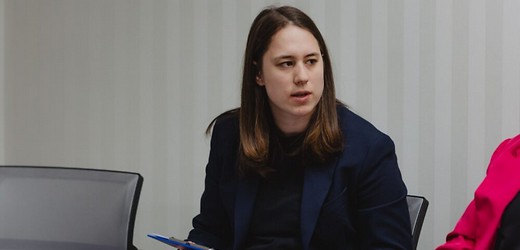
A week after the 14th Montenegro Pride marched through Podgorica under the slogan “We will live, for life’s sake”, Staša Baštrica, executive director of the NGO Queer Montenegro, told the Podgorica weekly Monitor that LGBTIQ people want more than rights on paper: they want to be able to live freely, every day.
Can queer people live freely in Montenegro? “They can, but the question is how many people really live freely and how many of us have simply got used to different levels of unfreedom,” Baštrica said. “A person can get used to a lot. Hiding a partner from family, friends and colleagues. Not holding a partner’s hand in the street. When you live like that for long enough, you start to see it as a normal way of life.”
For her, a free life means far more than the state not formally punishing people for who they are: it means having a home and an income, being able to love, start a family and be part of a community. That is why this year’s Pride spoke about life rather than survival. “We don’t want it to be enough that we survived another year without violence or discrimination. We want a good life,” she said.
Rights on paper, obstacles in practice
The biggest problem, Baštrica said, is that some rights exist on paper while real life keeps reminding people they are not equal. She singled out trans people and the need for a law on legal gender recognition based on self-determination. Montenegro still requires trans people to undergo sterilisation before they can change the gender marker on their documents, and mismatched papers affect every encounter with institutions, healthcare, schools and employers.
Same-sex couples are the other major issue. Montenegro adopted a Life Partnership Act for same-sex couples in 2020, an important step, but partners still do not have the same standing as heterosexual couples in every area of family life. Violence, hate speech and discrimination remain, and Baštrica said what matters most is what happens next: whether institutions stand behind a person whose rights have been violated.
“Easier to make an enemy of a minority”
In a society preoccupied with religious and national divisions, she said, LGBTIQ people are easily turned into one more subject to argue about, while low wages, housing and young people leaving the country go undiscussed. “The calculation is simple: it is easier to make an enemy of a minority than to build a society in which people have enough for a dignified life.”
Society also loses people, she warned: when someone leaves Montenegro out of fear, their knowledge and creativity leave with them. “The real question is what we all gain when no one has to make themselves smaller so that others feel comfortable.”
On Montenegro’s fast-moving EU accession, Baštrica cautioned against turning it into an administrative race to tick off laws as “adopted”, when what matters is whether institutions actually apply them.
There has been progress, she stressed: openly out public figures, a stronger community, a Pride held for more than a decade and more allies outside the community. But progress is never won for good. “I want us to get to the point where a person who is lesbian, gay, bisexual or trans can get up in the morning and simply live their life, without their identity being an obstacle.”
Source: monitor.co.me. English adaptation: gay-serbia.com.