
Queer groups from five Western Balkan countries meet in Podgorica: “The space for freedom is small”
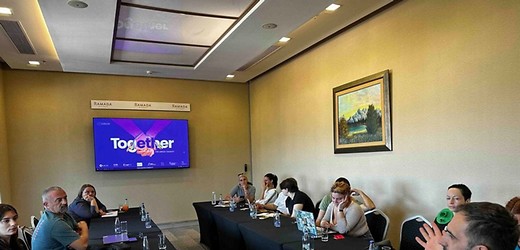
Civil society organisations from Montenegro, Bosnia and Herzegovina, Kosovo, North Macedonia and Serbia held a two-day meeting in Podgorica, Montenegro’s capital, during the week of the 14th Montenegro Pride. Their shared message: only networking, exchanging experience and acting together can answer the pressure LGBTIQ+ communities face across the region.
All of the groups run projects backed by “Together for LGBTIQ+ Equality”, a programme of the Podgorica-based Centre for Civic Education (CGO) funded by the European Commission. Teams compared notes on their work and the obstacles they face, discussed how to turn separate local initiatives into joint regional action, and joined the Pride Week programme and the Pride march on 3 October.
“This meeting was a chance to look back on our experience with the project teams and partners, learn from each other and improve regional cooperation and support for the LGBTIQ+ community,” said Petar Đukanović, CGO’s programme director. “By taking part in Pride Week and the Montenegro Pride march, we also sent a clear message of support for the rights, visibility and dignity of LGBTIQ+ people.”
Arber Nuhiu of the Centre for Social Group Development (CSGD) in Kosovo said the region’s commitment to European values is measured partly by whether LGBTIQ+ people can live safely, have access to justice and take part in society as equals. Bringing smaller organisations together, he said, helps turn common challenges into coordinated action and makes sure decision-makers hear the community’s priorities.
Rubina Čengić of the Centre for the Promotion of Civil Society (CPCD) in Bosnia and Herzegovina said the problems are the same everywhere. “The LGBTIQ+ community is threatened in the same way across the whole region. The space for freedom is small, the pressures are great, and every society has serious obligations towards the community. We have to push this through, and who will if not the media and civil society?”
Sara Milenkovska of the MARGINS coalition in North Macedonia spoke about resisting attacks on queer and feminist voices through collective care, archiving, activism and services. “Being together, being visible and being safe is becoming ever harder, but it is deeply political,” she said.
Serbia was represented by Kolektiv MANA. “There are few of us overall, and although we all know of each other and follow each other’s work, it matters to meet in person and share experience,” said Milica Crkvenjakov.
CGO runs the programme with ERA, the network for LGBTI equality in the Western Balkans and Turkey, Queer Montenegro, Skopje’s Queer Centre, the Tuzla Open Centre, Albania’s OMSA and Kosovo’s CSGD, with co-funding from Montenegro’s ministry responsible for cooperation with NGOs.
Source: portalanalitika.me. English adaptation: gay-serbia.com.