
LGBT and Serbia: Leposava Mijušković, the forgotten writer who wrote about love between two women
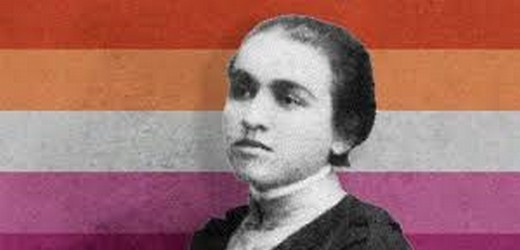
“And we, too, had to part! And part we did!…
“And there, at parting, we embrace and kiss again as we always did — only I feel clearly that I am doing it across a chasm,” says the heroine of the story Impressions of Life (Utisci života), after the woman she loves has left her to marry a man.
The story — which some might find provocative even today — was published in traditional, patriarchal Serbia at the turn of the 20th century.
It was written by a 23-year-old, Leposava Mijušković.
When this brown-haired young woman with a high forehead and a narrow face submitted her manuscripts to Srpski književni glasnik, then the most prestigious literary journal, she did not sign them — she shyly left only her initials.
Behind those two letters hid a Serbian writer whom even Jovan Skerlić — one of the most influential, and strictest, literary critics of the age — praised for her “strong personality and entirely original talent”.
And in the manuscript were stories that would today be classed as queer literature — writing that deals with LGBT+ themes and motifs.
There is something avant-garde in Mijušković's motifs and manner of writing, explains the literary historian Slavica Garonja Radovanac.
“Two of the four stories speak of homoerotic love between two young women, which was not a common occurrence in the literature of the time,” the professor at the Faculty of Philology and Arts in Kragujevac tells BBC News in Serbian.
The story reads like a stream of consciousness, following inner turmoil.
“It appears as an automatic act rising from the subconscious,” the professor notes.
“There — you believe you loved her, but you did not! You did not, know that!… You loved in her only the image of your own imagination — that is, yourself; and she loved you the same way.
People are bound to each other either by interest or by vanity — with you it was the latter! Love! Friendship! Nonsense!”, rages Mijušković's embittered heroine.
Little is known about Leposava Mijušković's life.
She was born in 1882 in the village of Vukmanovac, near Jagodina, in central Serbia.
“She was ahead of the time she lived in, and ahead of the small provincial world she grew up in,” Garonja Radovanac says.
Though a blacksmith's daughter, she went to Belgrade and enrolled in the Higher Girls' School, attended by the daughters of the upper classes. That education would prove decisive for her artistic and intellectual development, Garonja Radovanac believes.
“For a fuller biography of Leposava Mijušković, an unavoidable trace is the work of the Higher Girls' School, which produced the first generations of systematically and thoroughly educated young women from the upper social classes, many of whom went on to study abroad,” she explains.
Mijušković continued her education in Zurich, where she later worked as a teacher. The choice of city was no accident: Switzerland was more liberal than the rest of Europe at the time. Zurich was where socialist ideas were being born — where Nikola Pašić, Svetozar Marković, and the Russian revolutionary Mikhail Bakunin studied.
There, Leposava “liked to retreat to her room, sink into an armchair, wrap herself in a thick cloud of smoke, lighting cigarette after cigarette, and work like that”, wrote her contemporary and acquaintance Elza Kučera.
“She would dissect her own soul with a knife, anatomically. Weeks would pass without her leaving the room when she wanted to write.
“She neither ate properly nor slept.
“No reasons helped — no pleas. She would tear up what she had written, and write again…,” Kučera wrote after Mijušković's death in 1910.
Already in her first published story, Mijušković “thrillingly analyses lesbian homoeroticism, a form of transgression of all norms and prohibitions”, writes Jelena Milinković of the Institute for Literature and Art in her paper Love as a Performative Act in the Stories of Leposava Mijušković.
She wrote at the dawn of feminism in the Balkans — a significant moment that produced key figures and paved the way for the literature of the interwar period, Milinković writes.
“Because of the specific position women held in Serbia through its history, and the neglect of the literature they created, numerous texts either remained in manuscript or were published only in periodicals, appearing in book form only at the end of the 20th century,” she writes.
That is exactly what happened to Mijušković's work, first collected in a book by a relative only decades later.
That she herself was aware of the social constraints around her is shown by a passage in which, though writing of a beloved woman, her heroine sees that nothing remains for her “but to marry and bear children”.
When women stepped onto the male-dominated literary scene at the start of the 20th century, their writing was often treated as a thing apart, and critics gave it a shared label — women's literature.
Many women writers did not sign their work, using pseudonyms instead; like Jelena Dimitrijević, Danica Marković and Milica Janković, Mijušković wrote under another name.
Even after Jovan Skerlić revealed her identity while commenting on her prose, she continued signing herself only with her initials.
A pseudonym brought freedom, argues Ana Parejo Vadillo, professor of Victorian literature at Birkbeck.
“That sense of being freed from gender, freed from sex, in a period when those categories were very fixed in people's minds, was very important to her,” she told the BBC earlier.
Women published less then than they do today, but they were not entirely invisible, notes Bojana Antonić, a professor of literature and language, for BBC News in Serbian.
Women writers opted for a kind of intimate prose, because that was what was expected of them.
Yet through that “sentimental, naive, confessional tone, they spoke about provocative subjects”, Antonić says.
From forgotten writer to patron of queer art in Serbia: although published in 1905, Impressions of Life was not the first story with homoerotic motifs in Serbian literature, Garonja Radovanac points out.
“Her predecessor, the writer Jelena Dimitrijević, wrote about lesbian relationships in the harem,” she says.
Mijušković's prose was long forgotten; it was recalled — indirectly — by Dragiša Vitošević in his doctoral dissertation on Srpski književni glasnik in the 1990s.
He all but passes over the love between the two young women in the story, Antonić notes.
The decades of oblivion “have more to do with the relationship between erotology and literature, which began to be studied seriously only in the mid-20th century”, she believes.
“Her prose also deals with unconventional heterosexual relationships — for example, between a younger woman and an older man,” Antonić adds.
Leposava Mijušković died in 1910, at 32, having written only four stories — which may have contributed to the decades of neglect, Garonja Radovanac says.
Her death, too, is wrapped in mystery.
Myths were spun that she had fought a duel, or shot herself over an unrequited love, but there is no reliable record.
A full century later, Serbia has a literary award bearing her name — for prose with LGBT+ themes.
Source: BBC News na srpskom. English adaptation: gay-serbia.com.