
LGBT+ and literature: queer poetry in Serbia — poems of courage and fear
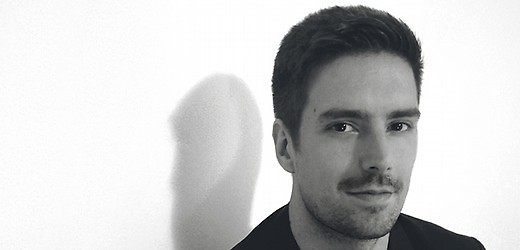
Words set you free, and in the poetic world of Đorđe Simić, everyone would like to be free.
Good boys — from the pressure to become “perfect sons-in-law”; his home town — from “inquisitive neighbours”; the hands of lovers walking down the street — from those “ready to attack them”.
Đorđe is a queer poet, an author of literature that explores LGBT+ themes, heroes and symbolism.
His poems speak of love, family, fears, the city and idleness — but also of the experience of queer people in Serbia.
“That experience always travels with a suitcase full of prejudice, internalised shame and transgenerational trauma. Is that not enough?” Simić tells BBC News in Serbian.
He began writing poetry about ten years ago, as a diary he was unsuccessfully trying to keep.
The diary did not survive, but writing poetry became “a need, and a particular form of therapy”.
The problems of coming out to one's community, of changing relationships with family — where condemnation is frequent and acceptance occasional — are among the basic themes of this literature, explains Igor Perišić of the Institute for Literature and Art.
An LGBT+ identity need not stand in clear opposition to other identities, such as the religious or the national, he says.
That is why this literature takes on “a much wider social field”, explains Perišić, author of the monograph Srpski (o)kvir: Contributions to Reading Serbian Literature in the Light of Queer Theories, for BBC News in Serbian.
Inspiration for poetry — in poetry
For a long time, Đorđe did not dare share his verses with anyone.
“Still, thanks to the people who read them, and to their persistence, those poems became part of my first published collection, Pitomi vulkan (A Tame Volcano),” he recalls.
Courage and fear inspire him, as does “the desire to understand the unknown, to learn, or at least to listen”.
“Poetry inspires me — young people who write more boldly and more loudly than me and the generations before mine.
“It matters to me that I am part of a group of authors who use their own poetry to give a voice to a marginalised community, in a society that often denies it visibility,” the young poet says.
Queer literature in Serbia is slowly finding its place on the market, Igor Perišić explains.
It is often marginalised — like the people who create it.
Experience from behind the literary scene shows a great deal of self-censorship, especially among younger authors, says the critic Katarina Kostić.
“They often don't want their first book to define them as queer writers, because they fear how they would cross from that position into the literary mainstream,” she tells BBC News in Serbian.
From patriotic to queer poetry
Valerian Savić often writes poetry and diary entries, and has been going to writing and recitation workshops “for as long as they can remember”.
“My first poems were patriotic — one was even called Oj, Srbijo moja krasna (Oh, My Beautiful Serbia),” they tell BBC News in Serbian.
In their teenage years, poetic language became a place for “questioning sexuality and non-binarity”, and romantic, sentimental poetry became Valerian's way of describing the world and themselves.
“A gentler literary expression always suited me; at school recitals they often held my feminine delivery and choice of poems against me,” they recall.
They also run a queer reading club, which is “a place for sharing content, but also for understanding”.
“Many of those who come to public poetry readings and workshops have not yet come out, so we wanted it to be a space filled with understanding, where literature can play its primary role — healing with words,” they say with a smile.
The hard road to a publisher
The world of literature became a refuge for Niks Božović, a non-binary person from Belgrade.
“In October 2021 I spent a whole month in hospital and had a lot of time to read — and out of that, later, came the desire to write,” Božović tells BBC News in Serbian.
They add that understanding other people and the world around them was always complicated, which is why they “found a home in poetry”.
Still, publishing a first book was difficult.
Literature with LGBT themes often fails to find its way to publishers willing to meet marginalised poets halfway, Božović believes.
Even in readers' reviews on social media, queer motifs hide behind euphemisms like “a personal destiny”, “a struggle with family expectations”, “new discoveries about oneself”, Katarina Kostić points out.
And when a book's central theme is the queer experience, then it is “brave”, it “shatters prejudice”, it “makes you think” — everything generic and in circles, with the good intention of attracting readers whom a clear definition in the review might put off, she explains.
Igor Perišić says there is “a small, but not entirely neglected literary scene”.
“This literature belongs to the margin and is often not part of literature in the broader sense.
“Small and mid-sized publishing houses are doing fairly well, and examples of queer literature can be found with them,” he says.
The competition for the Leposava Mijušković literary award — named after the Serbian writer from the turn of the 20th century whose work carries LGBT+ motifs — along with occasional festivals and poetry evenings, is slowly beating a path that leads in from the margin.
Source: BBC News na srpskom. English adaptation: gay-serbia.com.