
www.gay-serbia.com
|
www.gay-serbia.com |
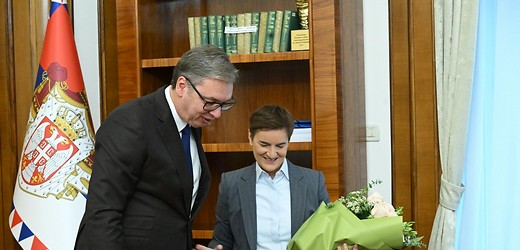
Ana Brnabić, the speaker of Serbia’s National Assembly, took over as acting President of Serbia on Monday, 28 September, the morning after Aleksandar Vučić resigned. The handover took place at the Presidency building in Belgrade and, as the daily Blic noted, fell on her birthday.
Vučić stepped down on the evening of Sunday, 27 September, saying he wanted to take part in the snap parliamentary elections on 25 October as an ordinary citizen.
LGBT+ outlets abroad, including PinkNews and LGBTQ Nation, pointed out that Brnabić is now the first openly lesbian person to lead a Balkan country. In 2017 she had already become Serbia’s first woman and first openly gay prime minister.
Brnabić was not elected president. Under the constitution, the speaker of parliament stands in when a president leaves office early, for no longer than 90 days. By the legal deadlines, a presidential election must be held by 27 December 2026 at the latest, so it will overlap with the campaign for the parliamentary vote.
“It is an honour for me to receive this office from such a man, and to be able to keep this position until the people choose the next President of the Republic of Serbia,” Brnabić said after the handover. “It is a little ironic: my whole professional life I fought against stamps and to abolish the stamp, and now I have been given the most important stamp in Serbia,” she added, a nod to her years pushing to scrap official stamps from paperwork.
As the Belgrade daily Danas noted, she is the third woman to serve as Serbia’s acting president, after Nataša Mićić (2002–2004) and Slavica Đukić Dejanović (2012), and the first person to hold all three top offices of state: prime minister from 2017 to 2024, speaker of parliament since March 2024, and now acting president.
Brnabić, a member of Vučić’s Serbian Progressive Party, has never hidden her sexuality, but has said from the start that she does not want to be branded “Serbia’s gay PM” and that the message should be about competence and trustworthiness. As prime minister she also said that legal recognition of same-sex couples was not her priority, arguing that Serbia would become more tolerant once people had secure, better-paid jobs.
Serbia still has no law recognising same-sex partnerships. Discrimination based on sexual orientation is banned by law, and trans people can change the gender marker on their documents, but only after a psychiatric diagnosis and hormone therapy.
Sources: blic.rs, kurir.rs, danas.rs, ozon.rs, lgbtqnation.com, thepinknews.com. English adaptation: gay-serbia.com.