
www.gay-serbia.com
|
www.gay-serbia.com |
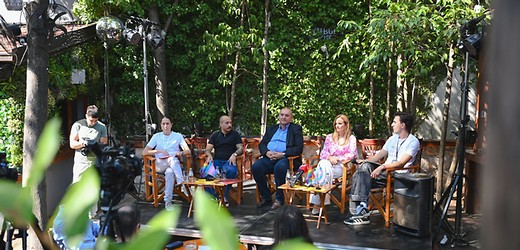
Protection of LGBTIQ people’s rights in Montenegro too often stops at ticking boxes, while the work the state has committed to is in practice carried out by civil society. That was the verdict of a panel discussion titled “What gets reformed, and who gets ignored”, organised by the LGBTIQ group Queer Montenegro as part of its Pride Café programme, the Montenegrin news portal CdM reported.
Siniša Bjeković, Montenegro’s Protector of Human Rights and Freedoms (the national ombudsman), said political parties flirt with the most extreme and rigid parts of the electorate and in doing so do nothing for the position of LGBT people. The biggest problem, he said, is not passing laws but implementing them. “It is not enough just to pass a law. That law has to be enforceable; it is impossible for anyone, even the courts and other bodies, to act if you don’t have the mechanisms to make a law enforceable,” Bjeković said.
He warned that young people have become not only more conservative but more extreme, with a growing readiness for violence against anyone who thinks or looks different. When homophobic messages are sent from the highest political stage, he added, “I don’t know what we expect from those who vote for them or see them as idols.” EU membership, a goal of the candidate country, will not solve every problem on its own, he stressed; the standards must be applied now.
“Montenegro has never had a problem with warrior courage, and probably never will for as long as it exists. But civic courage? That’s where I stop,” Bjeković said.
Nikoleta Đukanović, a professor and vice-dean at the University of Donja Gorica, said the EU integration process has lately served only as party promotion, and that human rights protection has not improved; if anything, the challenges are bigger than before. Schools deserve particular attention, she argued: “Our children are shaped from an early age to see diversity one-sidedly, and these topics are especially taboo for most teachers in primary and secondary schools.”
Jovan Džoli Ulićević of Spektra, a Montenegrin trans rights association, repeated that Montenegro denies trans people bodily autonomy: trans people still have to undergo sterilisation before they can change their documents. “A state that sterilises its citizens has nothing to say about human rights, European values and European integration,” Ulićević said, urging the adoption of a gender recognition law based on self-determination.
Staša Baštrica, executive director of Queer Montenegro, said the state does not allocate enough budget funding to meet the goals of its own strategy for improving the quality of life of LGBTIQ people, leaving most of the work to civil society. “With honourable exceptions, institutional support is missing. A big problem is the high level of homophobia and transphobia within the institutions themselves,” she said, calling on institutions to talk more with the organisers of Montenegro Pride about what they need.
Source: cdm.me. English adaptation: gay-serbia.com.