
www.gay-serbia.com
|
www.gay-serbia.com |
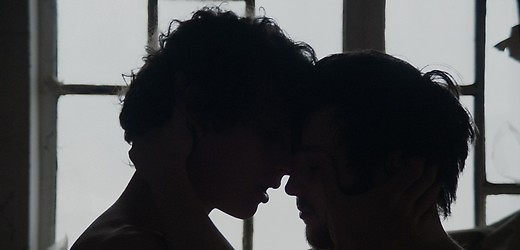
The news that RTV Slovenia has declined to buy the broadcast rights to the award-winning film “Sandbag Dam” (“Zečji nasip”) has drawn strong reactions in Slovenia and across the region. At first glance, the decision seems surprising.
Slovenia is considered one of the most liberal countries of the former Yugoslavia, particularly on human rights and the position of the LGBT community. Which is exactly why many wondered how the public broadcaster of such a country could turn down a film that takes on contemporary social themes and has a significant international festival life behind it. And yet, it happened.
Although RTV Slovenia insists the reason is programming judgement rather than the film's subject, suspicions have surfaced that the decision has to do with the fact that at the centre of the story is a love between two men. The polemic was amplified by the fact that Slovenian authors, producers and institutions took part in the film's production.
Directed by Čejen Černić Čanak, “Sandbag Dam” is a Croatian-Slovenian-Lithuanian co-production that had its world premiere at the Berlinale.
The film follows Marko, a young athlete from a small town whose carefully constructed life begins to crumble when Slaven, his former great love, returns to the community. While his family and surroundings expect him to keep living by the rules of a traditional environment, Marko confronts suppressed emotions and the question of how far he is willing to live by his own desires rather than other people's expectations.
After Berlin, the film was screened in Serbia as well, at the Palić European Film Festival and the Leskovac International Festival of Film Directing (LIFFE).
The film is not only about the LGBT community; it also deals with the position of anyone who differs from their surroundings, including people with disabilities in rural areas. That social engagement was one of the reasons the Slovenian producer Aleš Pavlin — one of Slovenia's most successful and respected producers, with a considerable international reputation — expected the film to be acquired.
Pavlin, who took part in producing the film, points out that “Sandbag Dam” has so far been shown at more than 50 festivals, premiered at the Berlinale, and won the Kinotrip youth jury award at last year's LIFFe festival in Ljubljana. Recognition of exactly that kind, he argues, should matter to a public broadcaster most of all.
Pavlin told the Serbian weekly Vreme that “all of that, along with the fact that the film takes on a socially engaged theme — the problems of the LGBTQ community, but also of people with disabilities in a rural setting — was why I personally, as a co-producer, and a large part of the Slovenian film community expected the public television to acquire and show it”.
He says he never received a satisfactory explanation from RTV Slovenia — only the position that the film had failed to convince the responsible editor. Only after one of Slovenia's most-read news portals opened up the story did the broadcaster issue an official statement: “Considering the supply of films of this genre, ‘Sandbag Dam' does not stand out.”
RTV Slovenia also cited limited funds as an additional reason — something Pavlin finds hard to understand, given that the television rights for films like this one usually involve relatively small sums.
The public broadcaster's decision has thus opened a wider debate: are the liberal values some societies profess actually visible in their cultural policy, or do the limits of tolerance shift the moment uncomfortable social themes are meant to reach the widest audience?
The greatest irony of the whole story is that this is not the problem of one film and one programming decision. Liberalism is not proven by laws and declarations alone, but by the willingness to hear stories that are not always comfortable, to open space for different experiences, and to let art ask questions.
Audiences in Slovenia can see “Sandbag Dam” at festivals and in regular cinema distribution — but, for now, not on their public broadcaster. The impression remains that one of the most liberal countries in the region has shown precisely the kind of caution and closed-mindedness one would least expect from it.
Source: Vreme. English adaptation: gay-serbia.com.